



October Visa Bulletin: What It Means for FY2027 Workforce Planning
October 23, 2026
Quick answer: The October Visa Bulletin sets the tone for a full fiscal year of international nurse recruitment planning. Immigration attorney Mike Hammond and WWHS President Patti Artley note that while FY2027 looks favorable for EB-3 visa movement, nursing leaders should treat international recruitment as a multi-year workforce strategy rather than a short-term fix, building pipelines that can absorb the visa bulletin's natural fluctuations.
What the October Visa Bulletin Means for FY2027 Staffing
Every October, one document quietly resets the clock on how quickly international relief might arrive: the Visa Bulletin.
In a recent webinar, "Understanding the October Visa Bulletin: What Healthcare Leaders Need to Know for FY2027 Workforce Planning," Patti Artley, President of WorldWide HealthStaff Solutions, and immigration expert Mike Hammond broke down what this year's bulletin actually means for the nurses you're counting on and the ones you haven't recruited yet. Three themes stood out, and each one has a direct bearing on how you plan your core team's support for the year ahead.
Why October Sets the Tone for the Year
October 1 marks the start of a new federal fiscal year, bringing a new annual baseline allotment of employment-based visas. But this year carries extra weight. Roughly 75 countries were paused on visa processing over the past year, from January through August 2026, which likely contributed to fewer family-sponsored visas being used during FY2026. Any unused family-sponsored preference visa numbers can be added to the employment-based limit for the following fiscal year. That potential spillover is one reason Hammond estimates FY2027 employment-based visa availability to reach roughly 160,000+.
For nursing leaders, that's genuinely good news. If your recruiting pipeline includes candidates from countries that weren't on the paused list, 2027 could move faster than the past few years.
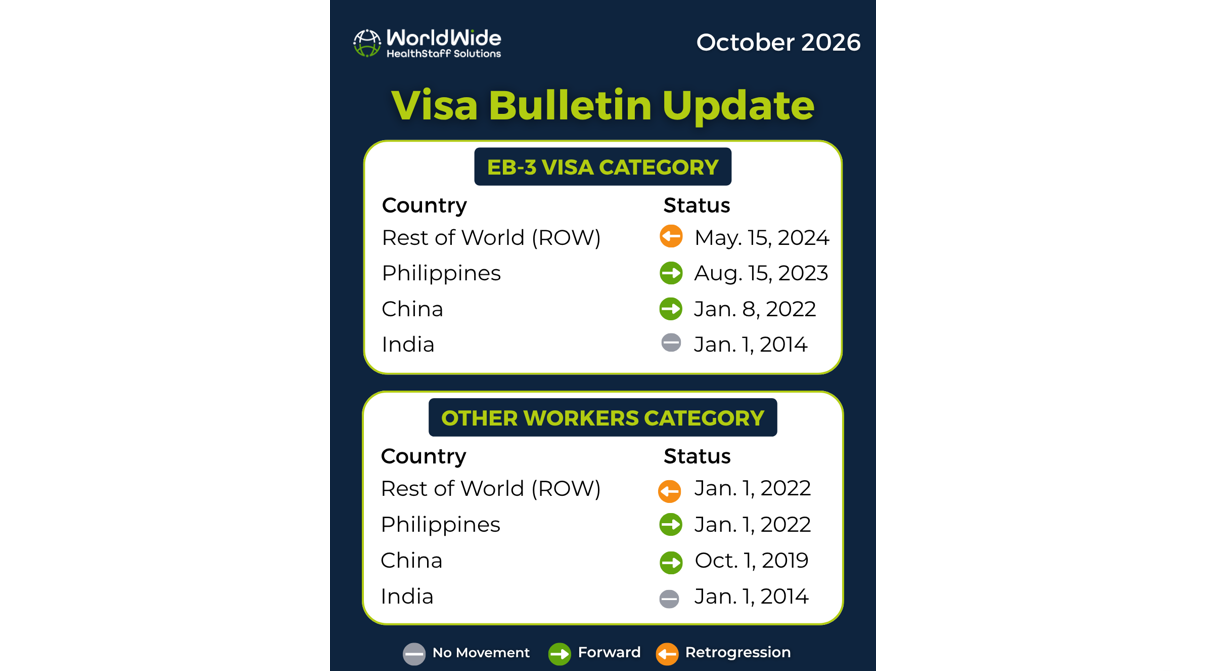
3 Ways to Plan Through Visa Bulletin Fluctuations
Hammond, Partner at Corporate Immigration Partners, has spent decades watching the visa bulletin fluctuate. His advice for navigating that uncertainty comes back to one thing: building a consistent pipeline. "I think building up a pipeline and building up an inventory is the only way to deal with retrogression and to deal with all these fluctuations of the visa bulletin."
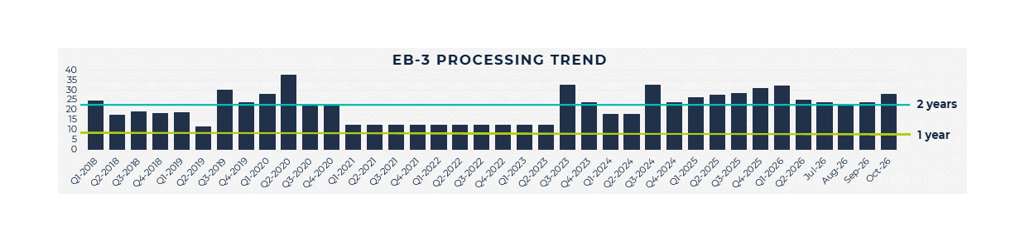
1. Recruit on a rhythm, not a reaction: If a set number of candidates enters the pipeline every quarter, a set number can continue to come out the other end, even as the bulletin moves from 18 months to 24 or 28. Those fluctuations matter against an already lengthy process: WWHS data shows EB-3 processing times have ranged from roughly one year to more than three years since 2018, with processing generally ranging from about 23 to 32 months since the start of 2025. Consistent intake is one of the few levers leaders can pull.
2. Use the wait, don't just endure it: A two- to three-year timeline isn't dead time. In fact, Hammond suggests using it to build clinical experience while also deepening the relationship before arrival. One WWHS client with a large Filipino nurse pipeline arranged for their local Catholic parish to livestream services to candidates still overseas, connecting them to the community long before their first shift. Small efforts like that help candidates begin building a connection to their future community before they arrive.
3. Treat it as workforce strategy, not a hiring project: Artley was direct on this point: this is a long-term workforce strategy, tied to the same planning horizon as retirements and new facility builds, not a short-term fix. WWHS's own hiring calculator reflects that logic, tying initial recruitment volume to projected openings, anticipated retirements, and expected growth over the next one to three years.
What This Means in Practice
Immigration policy will keep shifting, but a consistent pipeline can help take some of those swings out of the equation. Hammond's point is simple: when candidates continue entering the pipeline, organizations can maintain a steadier flow of arrivals even as processing timelines change. And there's real-world evidence for taking the long view. One WWHS partner achieved 95% clinician retention while reducing RN vacancy from 6.49% to 2.15% through a broader international direct hire strategy.
Consistency also creates more time to focus on the relationship side of recruitment. Staying connected with candidates and introducing them to their future communities before they arrive can help them feel like more than “a number on a chart,” something Hammond sees as an important part of retention.
What Comes Next
Visa outlook is favorable, and the biggest opportunity is to use this moment to strengthen a multi-year strategy. That means building pipelines now, aligning immigration timelines with workforce planning, and pairing international recruitment with the broader mix of staffing solutions already in place.
If you're ready to talk through what a sustainable pipeline could look like for your organization, WorldWide HealthStaff Solutions can help you map it out.
Frequently Asked Questions
Q: What is the EB-3 visa bulletin, and why does it matter for hospitals?
A: Published monthly by the
U.S. Department of State, the Visa Bulletin shows which immigrant visa priority dates are eligible to move forward. For healthcare organizations recruiting international nurses, changes in visa availability can affect when candidates move through the immigration process and ultimately arrive for onboarding.
Q: How long does the EB-3 process typically take right now?
A: WWHS data shows EB-3 processing times have ranged from roughly one year to more than three years since 2018, with recent timelines averaging around 30-36 months. That variability is one reason a consistent recruitment pipeline matters for long-term workforce planning.
Q: What should healthcare leaders avoid when planning around the Visa Bulletin?
A: Avoid assuming that a favorable year will continue into the next. Scaling back recruitment based on short-term Visa Bulletin movement can leave an organization more exposed if retrogression increases again. A consistent pipeline helps organizations plan through those fluctuations.
Q: What can hospitals do now, regardless of what the bulletin shows?
A: Build a consistent, quarterly cadence of international recruitment rather than recruiting reactively. A steady pipeline can help create a more consistent flow of arrivals over time and reduce exposure to fluctuations in any single month's Visa Bulletin.
Featured Blogs
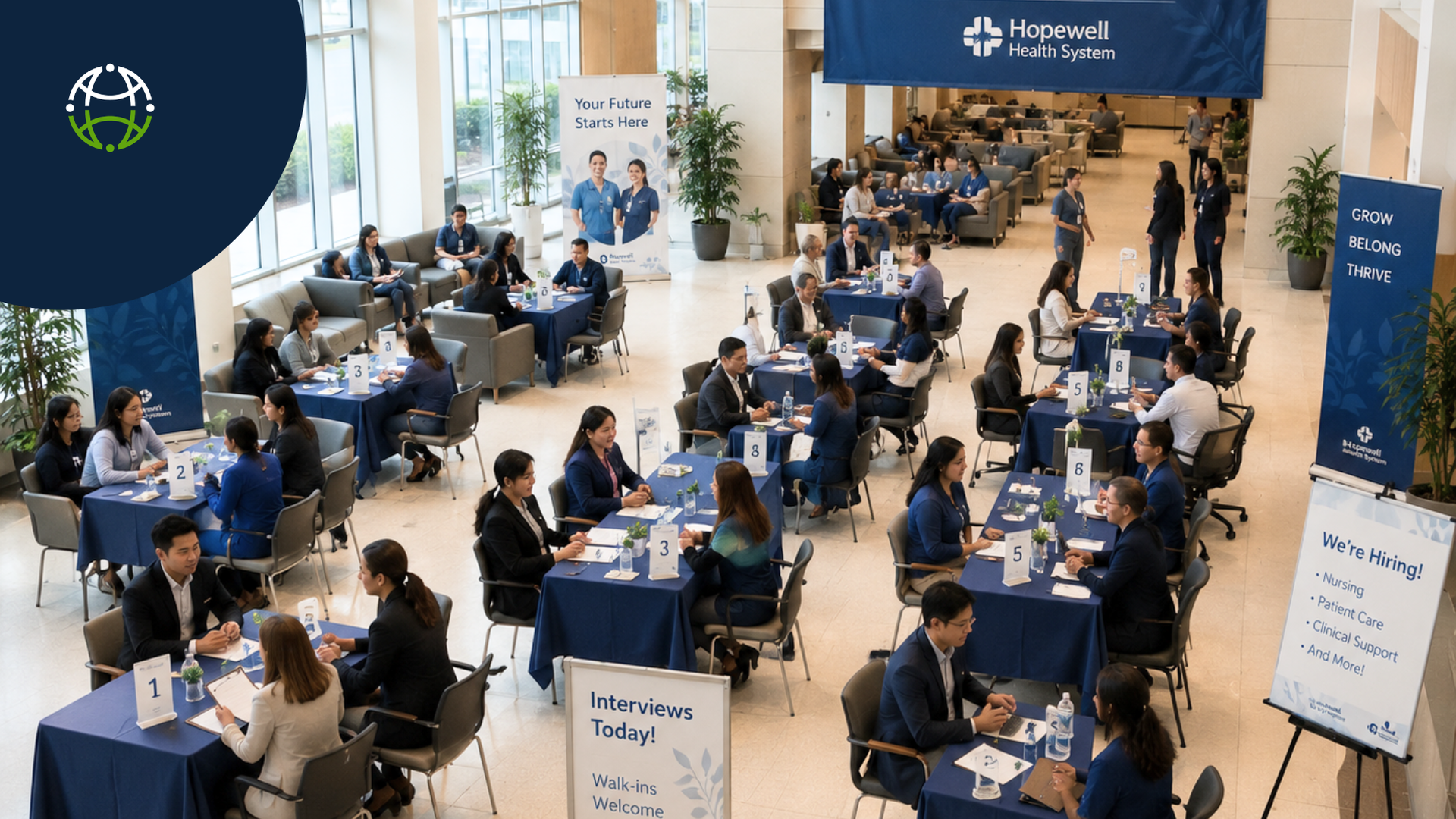
Inside WWHS's international nurse recruitment events: how they work and what health systems can realistically expect.
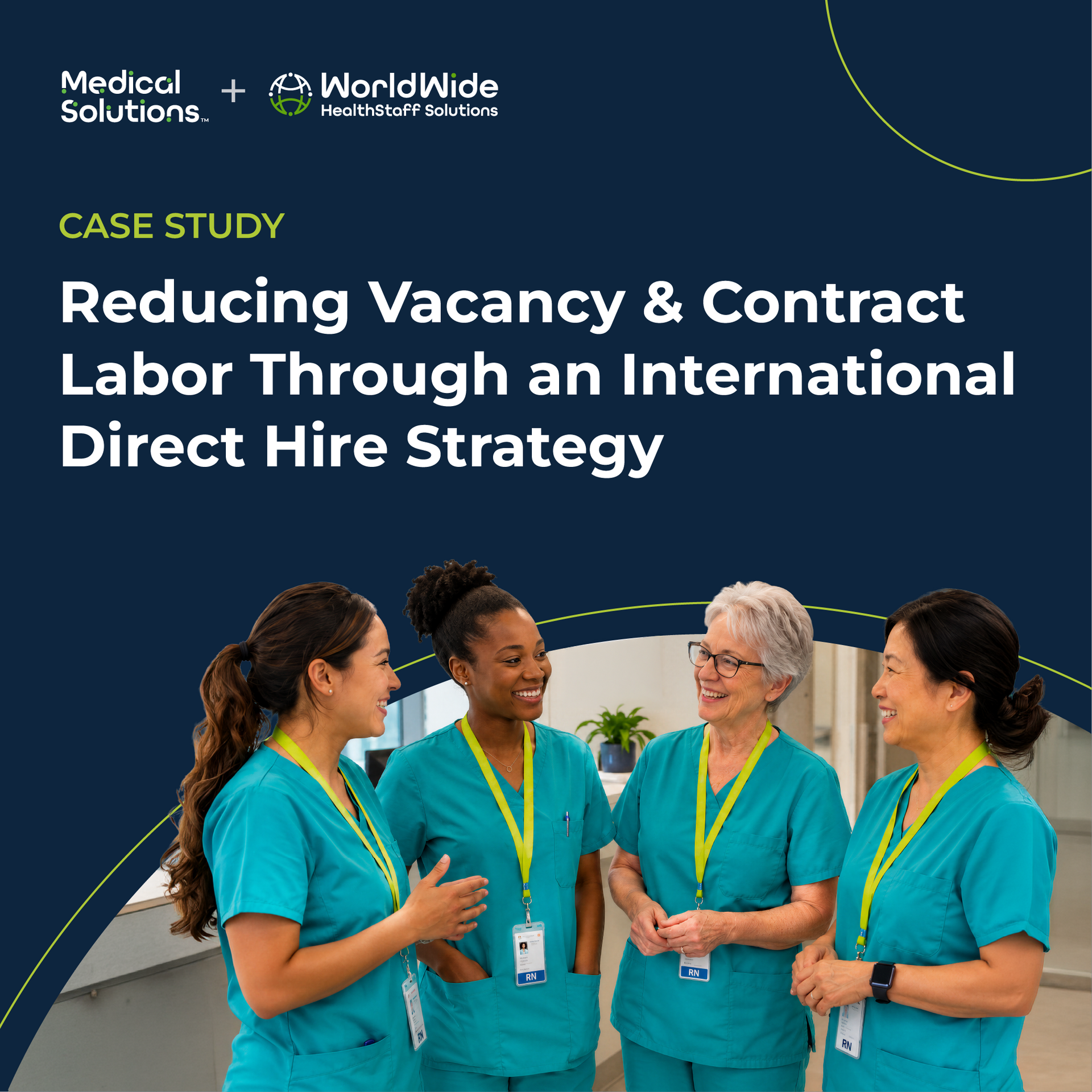
A regional nonprofit health system was working toward three clear workforce goals: improve clinician retention, reduce contract labor spend, and lower vacancy.

Three international clinicians reflect on their journeys to the U.S. and the careers, milestones, and new opportunities that have followed.
The 75-country immigrant visa pause has been lifted following a federal court ruling. See what this means for healthcare employers.

WorldWide HealthStaff Solutions (WWHS) highlights how international nurse recruitment can help health systems build sustainable nursing pipelines.

Understanding priority dates, retrogression, and Visa Bulletin trends can help put monthly changes into perspective. Get the key takeaways from our webinar.

Global healthcare talent is becoming an increasingly important solution for healthcare workforce gaps across the U.S.
The DHS Final Public Charge Rule may pave the way for visa processing to resume. See what this update means for healthcare organizations recruiting internationally.

Two Midwest health systems strengthened their Med Surg workforce through long-term international nurse recruitment. This case study compares two pipeline strategies at different stages of maturity.

What began as a long-term recruitment strategy has evolved into a robust pipeline supporting four hospitals, with more than 500 nurses placed and another 500+ active in the pipeline.